 0
0
 0
0
– Take a look around any public space, and you’ll notice a familiar scene: toddlers glued to iPads, pre-teens watching anime on their journey to and from school, teenagers head down engaging with the endless scroll of social media. Over the past decade and a half, screen time among children and young people hasn’t just grown; it has exploded. Running in parallel with this digital deluge has been an general increase in Attention-Deficit/Hyperactivity Disorder (ADHD) diagnoses.
While the exact relationship between screen exposure and neurodevelopment is complex, and the positive correlation between ADHD diagnoses and screentime admittedly only modest (e.g. Nikkelen et al, 2014) the timing is impossible to ignore. That’s why my first piece of advice to any parent is straightforward: stick to established screen time guidelines as strictly as you can (e.g. no more than 1 hour per day for under 5’s). Protecting developing brains from non-stop digital overstimulation during early childhood is one of the best proactive favours you can do for your child’s focus and attention span; particularly if you want to mitigate against them becoming too impulsive (Wallace et al, 2023).
But what happens when it’s already too late for prevention? What if your child or teenager is already struggling with the daily frustrations, executive dysfunction, and overwhelming chaos of ADHD symptoms?
In those moments of parental anxiety, when you’re desperate to help your child focus in school and calm their restless mind, it is incredibly easy to fall prey to “shiny gadget syndrome”, which is the promise of high-tech, non-drug solutions. But as a rigorous new study in Nature Medicine highlights (Conti et al, 2026), investing in unproven interventions is a horrible waste of time, energy and money.
When we pour our resources into treatments that lack proper clinical trials, we don’t just risk our savings; we end up giving families false hope. Worse, every pound and hour spent chasing a shiny quick fix is time, energy and bandwidth displaced from methods that actually work to manage ADHD.
When “FDA-Cleared” Tech Falls Short: The TNS Study
To understand how easy it is to get misled, let’s look at Trigeminal Nerve Stimulation (TNS).
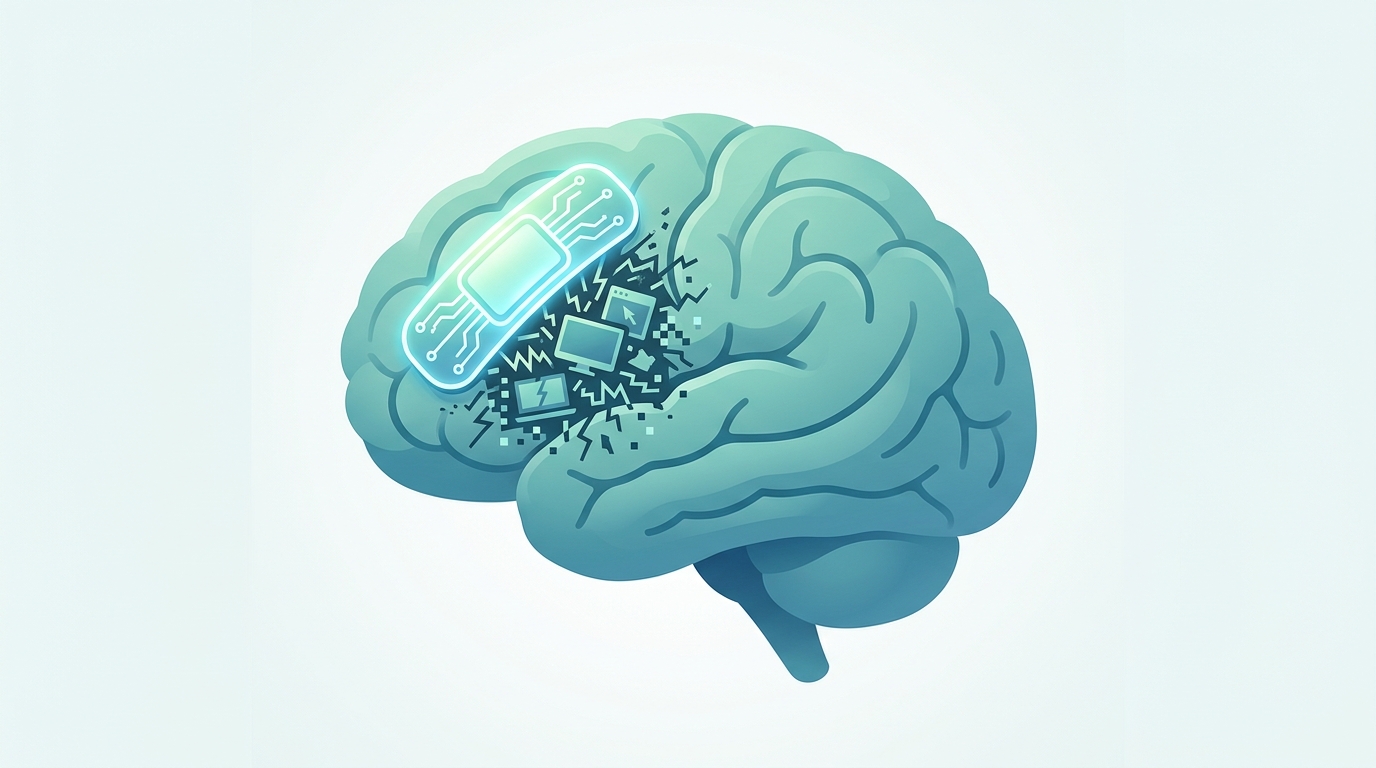
Back in 2019, the US Food and Drug Administration (FDA) cleared a device called the Monarch TNS system as the first non-pharmacological treatment for pediatric ADHD. It sounds wonderfully futuristic: a child wears a small battery-powered patch on their forehead while sleeping, sending tiny electrical pulses to the trigeminal nerve. The idea was that these pulses would travel into deep brain regions like the locus coeruleus to boost neurotransmitters like noradrenaline and dopamine, sharpening focus by morning.
The FDA gave it the green light based on a small pilot study of 62 children that showed promising symptom improvements. Tech-loving parents around the world celebrated. Finally, a gadget that could treat ADHD without pills!
However, early pilot studies can easily give false positives due to a powerful psychological phenomenon known as “neuro-enchantment” or “neuro-suggestion”, which is the intense belief that high-tech brain devices must be working.
To put TNS to a definitive test, a research team led by King’s College London and the University of Southampton conducted a robust, large-scale Phase 2b clinical trial. The study, published in Nature Medicine (Conti et al, 2026), involved 150 children and adolescents with ADHD across multiple UK centres. Half received real nightly TNS for four weeks, while the other half received a clever “sham” (placebo) stimulation designed to trick participants into believing they were getting the same treatment without actually stimulating the brainstem.
The results? Real TNS performed no better than the placebo patch.
Both groups experienced an improvement in parent-rated ADHD symptoms of around 26% to 29%. Why? Because the sheer excitement and belief in using a cutting-edge brain machine triggered a massive placebo response. In fact, the sham group improved by an effect size more than double what is normally seen in standard medication trials. While the device was exceptionally safe with no serious side effects, it completely lacked clinical efficacy.
The Hidden Cost of the Unproven
It’s easy to look at a safe, non-invasive device like TNS and think, “Well, even if it’s just a placebo, what’s the harm in trying?”
The harm isn’t physical safety; it’s opportunity cost.
Managing ADHD in youth takes tremendous effort from parents, educators and doctors. When families invest hundreds or thousands of pounds in brain-stimulation gadgets, unverified neurofeedback programs, or untested supplements, they drain their limited energy and emotional reserves. Crucially, chasing these unvalidated fixes delays access to evidence-based care:
- Proven Behavioral Strategies: Parent management training, environmental modifications at home and structured classroom accommodations that help kids build real-world executive functioning skills.
- Clinical Therapeutics: Evidence-backed pharmacological treatments (like stimulants and non-stimulants) which, when prescribed and monitored properly by specialists, have decades of clinical trials proving their ability to dramatically improve focus and daily quality of life.
- Lifestyle Foundations: Adequate sleep hygiene, regular physical activity and sensible boundaries on screen time.
The Takeaway for Families
Technology moves fast, and the temptation to buy a high-tech cure for a complex neurodevelopmental condition is completely understandable. But the latest Nature Medicine trial serves as a vital reminder: demanding rigorous, sham-controlled clinical trial evidence isn’t cynical; it’s protective.
First, protect your child’s developing brain by keeping screen time within healthy boundaries as long as you can. But if ADHD does enter your household, don’t let flashy tech gimmicks sell you a fantasy. Stick to the science, double down on proven therapies and reserve your time and energy for interventions that truly deliver.
References
Conti et al (2026) External trigeminal nerve stimulation in youth with ADHD: a randomized, sham-controlled, phase 2b trial. Nat Med;32(2):582-590. doi: 10.1038/s41591-025-04075-x.Epub 2026 Jan 16.
Nikkelen et al (2014). Media use and ADHD-related behaviors in children and adolescents: A meta-analysis. Developmental Psychology, 50(9), 2228-2241. https://doi.org/10.1037/a00373
Wallace et al (2026) Screen time, impulsivity, neuropsychological functions and their relationship to growth in adolescent attention-deficit/hyperactivity disorder symptoms. Sci Rep; 13(1): 18108. https://doi.org/10.1038/s41598-023-44105-7


